

Content

You can write off intangible assets (for a 15-year write-off period) that have been purchased by using the statutory rates set by the Internal Revenue Service (IRS). As per the alternative FASB rule for private companies, goodwill can be amortized on a straight-line basis over a period not to exceed 10 years. The need to test for impairment has decreased; instead, an impairment charge is recorded when an event signals that the fair value may have gone below the carrying amount. The Financial Accounting Standards Board (FASB) recently came up with a new alternative rule for the accounting of goodwill. A 2001 ruling decreed that goodwill could not be amortized but must be evaluated annually to determine impairment loss; this annual valuation process was expensive as well as time-consuming. Think of a company’s proprietary technology (computer software, etc.), copyrights, patents, licensing agreements, and website domain names.
There are different types of goodwill based on the type of business and customers. Practice goodwill refers to the amount of goodwill specifically for practices, such as a law firm. Practice goodwill is similar to business goodwill as it considers the practice’s overall value.
Goodwill in business vs. other intangible assets
And if you do start buying up the competition, you’ll know exactly what to look for. Harold Averkamp (CPA, MBA) has worked as a university accounting instructor, accountant, and consultant for more than 25 years. Connect with an Advisor to explore program requirements, curriculum, credit for prior learning process, and financial aid options. Finally, industry and market conditions also affect the value of goodwill. Companies operating in high-growth industries or markets may have higher goodwill value than those in more mature or declining markets. The reason for this is that, at the point of insolvency, the goodwill the company previously enjoyed has no resale value.
- This helps ensure that everyone involved in the evaluation process has a shared understanding of the factors that should be considered in determining the value of goodwill.
- Consequently, the accounting standards require that an acquirer regularly test its goodwill asset for impairment, and to write down the asset if impairment can be proven.
- For example, if your excess purchase price is $400,000 and your fair value adjustment is $100,000, your goodwill amount would be $300,000.
- As your business grows, you may find yourself in the position of acquiring another company, at which point goodwill may be a necessary addition to your balance sheet.
- Examples include a dedicated customer base, a strong industry reputation, and a committed workforce.
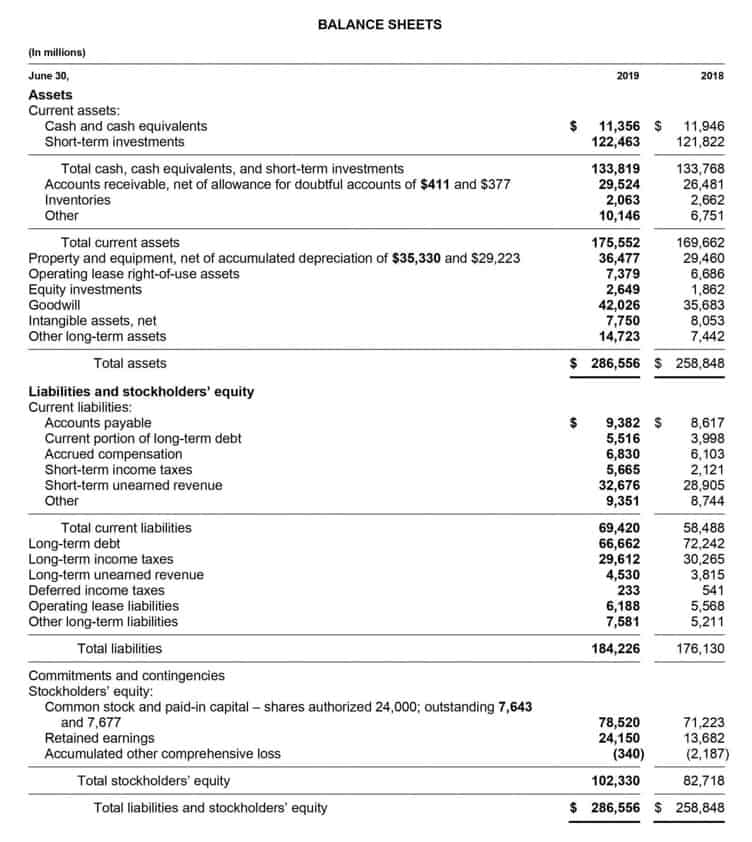
Negative goodwill arises when an acquirer pays less for an acquiree than the fair value of its assets and liabilities. This situation usually only arises as part of a distressed sale of a business. The value of goodwill is highly subjective, especially since it does not independently generate cash flows. Consequently, the accounting standards require that an acquirer regularly test its goodwill asset for impairment, and to write down the asset if impairment can be proven. Thus, company A paid $1,600,000 premium above the company’s net assets to acquire its assets, which add to its earning power. The goodwill account is located in the assets section of the balance sheet.
How to Calculate Goodwill?
Investors and stakeholders are more likely to invest in a business with a strong reputation and brand recognition, leading to increased profitability and growth. If a company determines its goodwill may have been impaired, it must recognize its impairment loss in its financial statements. The impairment loss can decrease the value of goodwill and the company’s total assets.
Charlene Rhinehart is a CPA , CFE, chair of an Illinois CPA Society committee, and has a degree in accounting and finance from DePaul University. Mary Girsch-Bock is the expert on accounting software and payroll software for The Ascent. If you’re using the wrong credit or debit card, it could be costing you serious money. Our experts love this top pick, which features a 0% intro APR for 15 months, an insane cash back rate of up to 5%, and all somehow for no annual fee. Understanding what goodwill is and how it can impact your business is just one more part of being a business owner.
Goodwill Impairments
Goodwill can also be used as collateral for loans or as part of a merger or acquisition deal structure. Goodwill is often linked to a company’s reputation and customer loyalty, but the exact worth can be difficult to ascertain without using estimates or professional judgments. This involves estimating the value of the what does goodwill mean in accounting assets and liabilities obtained in the acquisition. The fair value is usually determined by a professional appraiser or accountant, who considers the present value of the assets acquired minus the value of the liabilities assumed. Goodwill also plays an essential role in reducing the risk of stock price volatility.